
The rules
of Valdren.
Before crossing into the realm, discover the paths, choices and dangers awaiting your party.
Explore the guideThe game is evolving: this guide describes the rules currently available and identifies features still in development.
The realm of Valdren
Valdren is a first-person role-playing adventure. Prepare a party of adventurers and explore the places of a dark fantasy realm, one tile at a time. Each adventure tells its own chapter; characters, items, skills and rules are shared throughout the realm.
Observe your surroundings, find your way, open passages, gather resources and face the creatures blocking your path. Available chapters evolve as the game develops.
Create your characters
Choose from the three ancestries currently offered at creation — human, elf or dwarf — then a sex and a portrait. Name your character. Legacy ancestries on existing characters are no longer offered at creation.
Distribute your points among the six attributes and select three different rank-one skills. There are currently eight slots for available characters; archives are separate.
A character’s attributes
The character sheet has six attributes: Strength, Agility, Endurance, Intelligence, Willpower and Perception. At creation, each starts at 6 before ancestry and sex bonuses and the free point. You may lower a base score to 3 to redistribute points; bonuses still apply. Effective scores may also include permanent equipment bonuses.
Strength: it increases physical damage dealt with a weapon. The bonus is 0 from 1 to 4, +1 at 5–6, then rises by 1 every two points. Unarmed base damage is a fixed 1. Strength does not currently add bag slots.
Agility: its modifier is (Agility − 6) / 2 rounded down. It contributes to physical attack rolls and Defense. For example, Agility 8 gives +1; Agility 5 gives −1. It can also be required for certain skill ranks.
Endurance: it sets starting hit points and contributes to the gain at each level. Together with Intelligence and Willpower, it also determines maximum psyche. Some skills require a minimum Endurance score.
Intelligence: it contributes to psyche and to the requirements of several skills, including knowledge and elemental magic skills. Playable spells are still in development.
Willpower: it also contributes to psyche and to requirements for some magic skills. The spell catalogue presents the planned paths without making those spells playable in adventures yet.
Perception: it is used in requirements for skills such as Trap Detection, Stealth and Ranged Weapons. By itself, it does not trigger automatic trap detection.
Hit points (HP): they measure health. At level 1, maximum HP equals 10 plus permanent Endurance. At each gained level, a 1d10 roll plus the new Endurance permanently increases that maximum. At 0 HP, a character cannot act and does not automatically return to life. A living character outside an expedition recovers resources.
Psyche: this reserve has a maximum of (Endurance + Intelligence + Willpower) / 2 rounded down. It appears on the character sheet; playable magic costs and effects are not active yet.
Experience and level: defeated creatures may grant experience, shared among the party’s living members. When the next level threshold is reached, choose one attribute point and one skill point; the latter can be kept in reserve. Skill ranks have their own requirements.
Attack and Defense: a physical attack roll adds a twenty-sided die, the Agility modifier and, where applicable, weapon bonuses and Weapon Handling rank. It hits only when the total exceeds the target’s Defense. A character’s Defense equals 10 plus the Agility modifier, ordinary protection from equipment and magical protection capped at 2. There is no separate defense roll.
Equipment and carrying: each character starts with a dagger, a full waterskin and a ration, and a 12-slot bag under the current settings. Each stored item occupies a slot; equipped items use their own positions, including hands, protective gear and jewelry. Bag capacity is a creation setting, independent of Strength; the character sheet shows the effective capacity.
Form a party
You can prepare up to 50 parties using your available characters. A party can contain one, two, three or four characters: you need not fill every position to set out. The formation has two front and two rear positions. A character belongs to only one prepared party and can join only one active expedition.
From Your company, open a companion’s sheet to manage equipment. Before engaging an expedition, you can give an item to another member of the same party; it goes into a free bag slot. Arrange positions lets you swap places. Unassigned companions can join an available position.
A prepared party chooses its chapter before setting out. Its membership can still be arranged before departure; once exploring, its members remain committed together.
Playing a chapter
Choose a party and an accessible chapter, prepare equipment at the departure market, then enter the adventure. Once inside, the party is committed to that expedition. You can return to it later: progress, position, discoveries and companion state are saved as valid actions occur, without a manual save button.
While the expedition is active, you cannot remove a character from that party or move one into another. Membership stays fixed, although the same members can swap formation positions. If every party member falls to 0 HP, the expedition is defeated and ends.
Each party has its own expedition and save. Two different parties can therefore explore the same chapter at the same time or one after the other: their movement, discoveries and battles remain separate. A character never joins two active expeditions at once.
To leave exploration normally, reach its entry point or an exit location provided in the chapter; completion requires the objectives configured for that version: defeat the designated creatures and bring back the required quest evidence, then reach the chapter-end tile. Arrival alone does not replace those objectives. An exploration chapter may explicitly require only reaching its end. There is no instant leave button from any tile. Finding the way out may require searching, opening a passage or crossing several rooms.
Chapters are designed to provide a route out of exploration, even when it is not obvious. Each published map still needs to be checked against that goal. Exceptionally closing an engaged party abandons its expedition and progress in that chapter; characters, their personal progression, ordinary equipment and account gold are retained.
Gold and shops
Gold belongs to the account and is shared by all your parties. Gold collected by one party joins the same balance, and a purchase for one character reduces it for everyone. Purchased items go into the chosen companion’s bag if there is room.
Before entering a chapter, the departure market offers three shops depending on published goods: the Armoury for weapons, armour and protection; the Herbalist for available potions and remedies; and the Tavern for food, rations and waterskins. The Armoury uses only published models and prices. Potion and provision purchases remain closed until their use is active; previously owned items are retained. Purchases are available during preparation, before exploration begins; the shops are not accessible from the dungeon.
A successful expedition may grant a chapter reward: total experience is shared equally among surviving party members, and gold goes into the player’s shared purse. Fractional experience is retained. Rewards are awarded once per expedition, after the last ending scene or immediately on completion if there is no ending sequence. A summary then shows the XP actually received by each character and the gold earned before returning to My parties. Leaving or being defeated grants no completion reward. Administrators configure amounts for each chapter; a started expedition retains its amounts. An older expedition without saved amounts uses the published reward when confirming completion.
Explore and interact
Move forward or back, turn or step sideways in the world view. The map is revealed as you progress. Doors, mechanisms, passages, stairs and traps require observation and the appropriate controls. A passage between zones is set into the wall and has a visible opening adapted to its biome; when an illustrated scene appears, choose its action to cross or return to your tile.
Some passages may cause a fall and damage. Accessible items and gold pouches can be picked up; gold joins the account balance, while ordinary items occupy inventory space. Item pages describe their available uses.
Chests and stored items
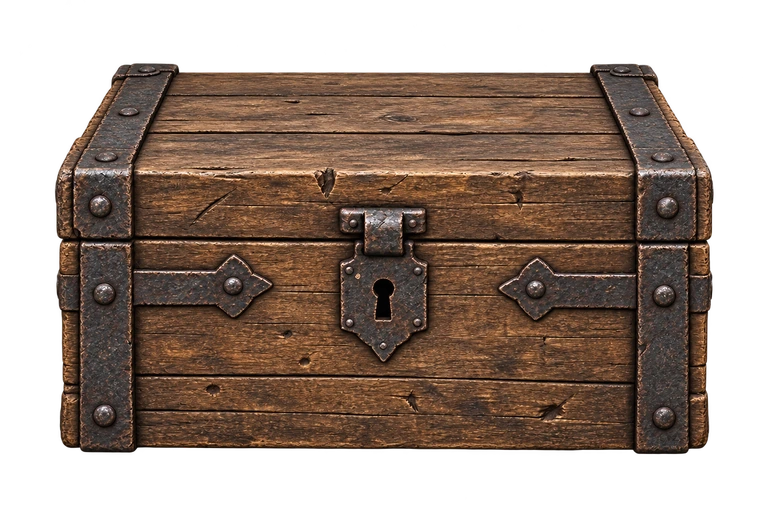
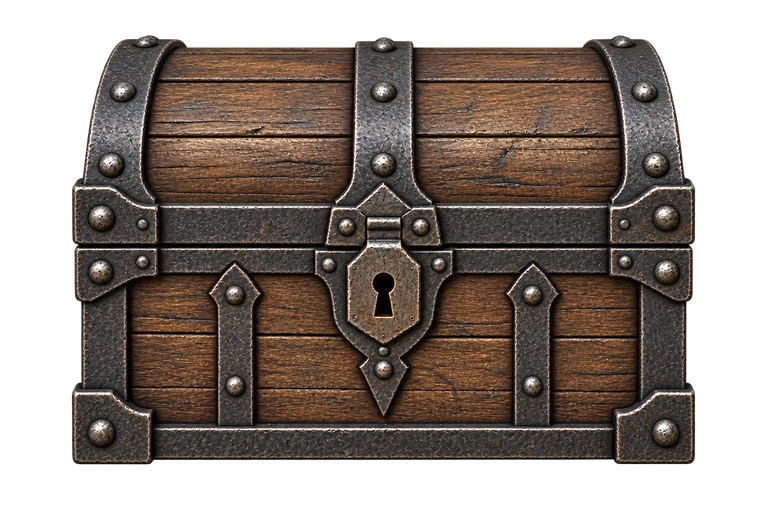
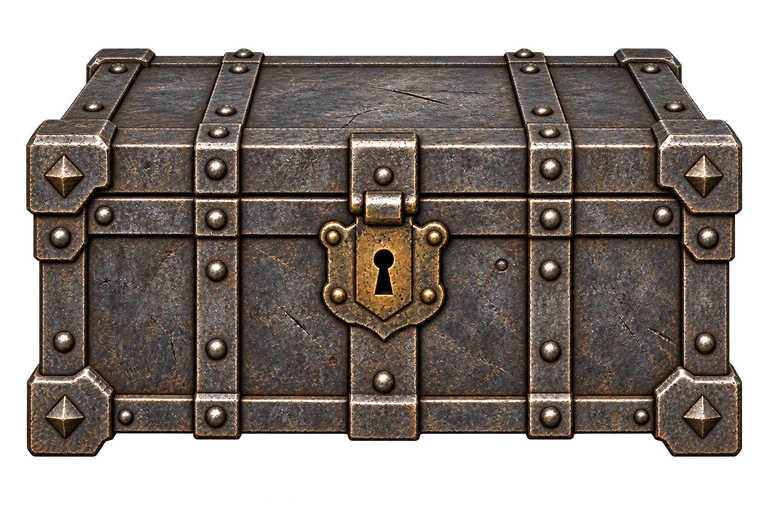
Small wooden chests, reinforced wooden chests and metal chests appear in chapter scenery. A chest occupies the centre of its tile and blocks the party from entering it. Move the party to an adjacent tile and click a chest to open it. Each chest has its own key: the matching key carried by a living companion is consumed on first unlock. Other keys do not work. The chest then remains unlocked for this expedition. You may also pick its lock: resistance defaults to 50% and can be set from 0 to 100% per chest in the chapter editor. Success chance is 50% + 10 points per rank of the best living companion with Lockpicking, minus resistance, capped to 0–100%. The selected companion must carry lockpicks; every attempt consumes one use, successful or not. A picked chest remains unlocked without consuming its key.
Chest contents fill the exploration view as a grid. Right-click an item to view its details. Drag an item onto a companion’s portrait or an inventory slot to give it to them, including directly onto compatible equipment slots when their skills and attributes meet the requirements; drag a character’s item onto an empty chest slot to store it. The right panel keeps the same width for the party, equipment and attributes. Taking an item requires a valid inventory destination; a chest holds up to 64 items. Transfers are unavailable during combat. Stored items keep their state and remain available after disconnecting or changing zones, only for this party and this expedition. Retrieve them before ending or leaving the expedition: a new expedition starts with the initial chests and contents.
Items, equipment and weapons
Each character has an individual bag and equipment slots: hands, head, body, feet, gloves or gauntlets, ring, necklace and back for a bag. A weapon occupies one hand; a shield takes the other and adds protection. Two one-handed weapons can be equipped if the character has at least the first rank of Dual Wielding; each separate attack receives the Dual Wielding bonuses. A two-handed weapon occupies both hands and rules out a shield or second weapon. Exchanges between members of the same expedition depend on available space and current restrictions.
Usable melee weapons can strike an accessible enemy. Each weapon lists its damage and bonuses; Strength affects armed melee damage. Unarmed base damage is 1. Bows and crossbows can shoot a visible creature up to three tiles ahead of the party when the character has a matching arrow or bolt in their bag; every shot consumes one piece of ammunition, even on a miss. Sling attacks are still in development.
The catalogue also distinguishes protective gear; consumables such as rations and potions; refillable waterskins; ammunition (arrows, bolts and sling stones); keys and tools; documents; quest items; valuables and currency. Uses and effects depend on each item page and availability; a catalogue entry does not mean every action is playable yet. Inventory is locked during combat. A dead companion retains their items, which others can recover outside combat.
Explore items and weaponsCombat
Combat takes place in real time. Each character and creature has an independent recovery period, normally two seconds after an action. Other party members can act during that time.
A front-rank character can make a melee attack against an accessible creature in front of the party. Creatures attack exposed members according to the side they approach from; living members behind an ally are not exposed first. Some creatures can attack at range.
A physical attack hits when the twenty-sided die result plus bonuses exceeds the target’s Defense. Damage is then removed from its HP. With any usable weapon, each Weapon Handling rank adds +1 to the attack roll and +5% damage. Ranged Weapons adds the same bonuses per rank with a bow or crossbow; Dual Wielding adds them to each separate attack when two one-handed weapons are equipped. These bonuses stack and the total extra damage is rounded down. For example, against Defense 12, a die result of 10 and total bonus of +3 make 13: the attack hits; a total of 12 is not enough. If the weapon deals 4 damage and the target has 9 HP, it drops to 5 HP. The log shows hits, misses and damage.
A member at 0 HP can no longer fight. If every member falls, the expedition is defeated. Defeated creatures may grant experience and, where their profile allows it, gold to pick up.
Explore the bestiarySkills and progression
Skills shape each character’s path: combat, exploration and stealth, or elemental magic. Each has up to five ranks and its own requirements. Skill pages distinguish active effects from those still in development.
With the Dodge skill, the chance is 5% + 3% per rank, from 8% at rank 1 to 20% at rank 5, to avoid a ranged attack that would hit or damage from a fall trap. It does not apply to melee; the party still falls. Dodging spells awaits playable magic.
Equipment and skills: Ranged weapons is required to equip bows, crossbows or slings; Two-handed weapons for two-handed melee weapons; Dual wielding for a second weapon; Shield use for a shield; Heavy armor for heavy armor. Bows, crossbows and two-handed melee weapons go into the left hand and also occupy the greyed-out right hand. A sling leaves the second hand available, including for a shield. Bow and crossbow shots are playable up to three tiles with line of sight; each shot consumes one individual arrow or bolt.
The best rank among living party members gives a 10% chance per rank to remain unnoticed. From the side or back, one roll per new tile within perception range. From the front, the party is detected automatically with clear line of sight. Once detected, that creature remembers the party for this expedition. Turning and refreshing never reroll. Without the skill: no stealth chance.
Sneak attack adds 10% damage per rank to an attack from the side or back, up to +50% at rank 5. Calculated on total attack damage including existing bonuses, then rounded down. No extra damage from the front or when facing is unknown. Uses the attacking character’s own rank.
Picks a chest or a door or wall lock marked as pickable: 50% + 10 points per rank of the best living party member, minus lock difficulty (0–100), capped to 0–100%. Select lockpicks in inventory, then click the lock. Every attempt consumes one use, successful or not. Lockpicks: 5 gold in the shop, 5 uses, destroyed at zero, no resale or repair. A matching key opens or closes doors and stays in inventory.
Automatically detects hidden traps within one tile, including pits and trapdoors: 50% + 10 points per personal rank − concealment (0–100), capped to 0–100%. Each living skilled member has one attempt per trap per expedition; no reroll on return or reload. Once one member succeeds, the party can see the trap, but it remains dangerous. A floor trap deals its damage once per expedition; Dodge can avoid it.
The seven ordinary keys match the seven lock appearances. A quest key is bound to one lock and one chapter; it may be found in one zone and open its lock in another zone of the same chapter. Door keys open and close without being consumed; the key belonging to a chest is consumed on its first unlock. Quest objects and quest keys are stored in the shared Quest items space, available in game without using bag slots or depending on a living holder. Ordinary keys and tools remain personal. Never used and Already used track successful actions; a previously used door key remains reusable. A consumed chest key appears in the history without becoming usable again. Unrecorded past use of an older item is shown as unknown. All keys and quest objects are removed from usable storage when the expedition is left, completed or defeated. Ordinary tools keep their remaining uses.
Consult the skill pages for their effects, ranks and individual requirements.
Discover the skillsSpells and spheres
The grimoire presents the paths of Fire, Air, Water and Earth. Depending on the spell, these spheres offer offensive, protective, support and exploration possibilities. Each page presents the information already defined for that spell.
Ranks in an elemental skill will improve spells in its sphere. Each spell page identifies the affected aspect, such as damage, healing, protection or duration. Exact scaling remains to be defined before magic becomes playable.
Playable magic, spell learning and detailed costs and effects are still in development. A spell’s presence in the grimoire does not mean it can already be cast in game.
Open the grimoire